Promotional content developed and funded by Novartis Pharmaceuticals UK Ltd
for UK
healthcare professionals only
INGRAIN-MF
Incorporating genetics, risk and
associated burden into MF management
MODULE 4: Optimising management of myelofibrosis and evaluating the use of JAK inhibitors

Ruxolitinib for treating disease-related symptoms and splenomegaly in MF
Ruxolitinib phase III trials
The pivotal clinical trials for the use of ruxolitinib in patients with myelofibrosis (MF) were:
COMFORT-I1
Phase III, double-blind, randomised
Ruxolitinib (n=155)
vs
placebo (n=154)
Patients with intermediate-2 or high‑risk primary MF
COMFORT-II2
Phase III, double-blind, randomised
Ruxolitinib (n=146)
vs
best available therapy* (BAT; n=73)
Patients with intermediate-2 or high‑risk primary MF, or post-PV or post-ET MF
*47% of patients in the BAT arm were receiving hydroxyurea.2
ET: essential thrombocythaemia; PV: polycythaemia vera
Primary endpoints were the proportions of patients achieving a ≥35% reduction in spleen volume from baseline at Week 24 (COMFORT-I) or Week 48 (COMFORT-II):1,2
Splenomegaly and symptom control
In the COMFORT-II study, at Week 48:2
Mean percentage change from baseline of palpable spleen length
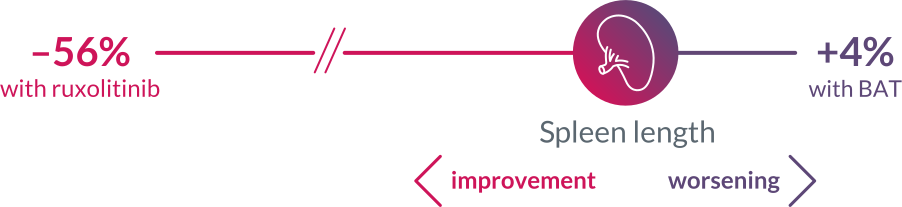
The majority of improvements in spleen size occurred within the first 4 weeks of treatment.2
In the COMFORT-II study, at Week 48:2
Mean percentage change from baseline of EORTC QLQ-C30 symptom scores
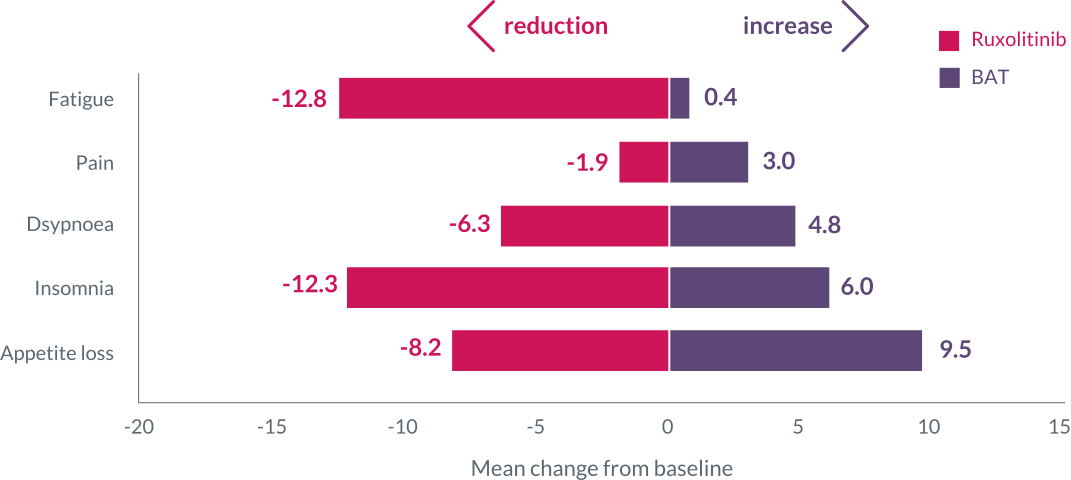
Please note: this was an exploratory analysis and results must be interpreted with caution.
The majority of responses with regards to symptom scores occur rapidly, within the first 4 weeks of treatment.1
EORTC QLQ‑C30: European Organisation for Research and Treatment of Cancer quality of life questionnaire core model
Overall survival
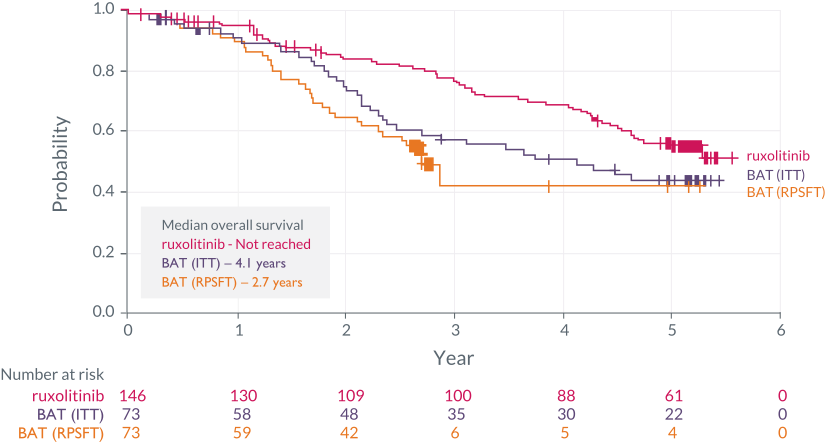
There are some data from clinical trials that indicate treatment with ruxolitinib might be associated with increased overall survival compared with BAT:3
- In a 3-year follow up of COMFORT-II, patients receiving ruxolitinib showed a significantly greater reduction in the risk of death than those receiving BAT (mortality rate 19.9% vs 30.1%; HR 0.48; 95% CI: 0.28-0.85; p=0.009)3
- However, in the 5-year follow up, the reduction in risk of death versus BAT was not significant (mortality rate 40.4% vs 47.9%; crossover-corrected HR 0.44; 95% CI: 0.18-1.04; p=0.06 - not significant)4
Post hoc Kaplan-Meier analysis of overall survival4
5-year survival
56% ruxolitinib (estimated)
44% BAT (crossover corrected)
HR: 0.44; 95% CI: 0.18-1.04, p=0.06 (not significant, for descriptive purposes only)
Adapted from Harrison C et al, 20164
CI: confidence interval; ITT: intention-to-treat; RPSFT: rank-preserving structural failure time analysis
Reductions in splenomegaly and disease-related symptoms from baseline have been observed in real-world studies in addition to clinical trials.5,6
Adverse events should be reported. Reporting forms and information can be found at
www.mhra.gov.uk/yellowcard.
Adverse events should also be reported to Novartis online through the pharmacovigilance intake (PVI) tool at
www.novartis.com/report
or alternatively email medinfo.uk@novartis.com or call 01276 698370
References
- Verstovsek S, Mesa R A et al. A double-blind, placebo-controlled trial of ruxolitinib for myelofibrosis. N Engl J Med 2012;366:799-807
- Harrison C, Kiladjian J J et al. JAK inhibition with ruxolitinib versus best available therapy for myelofibrosis. N Engl J Med 2012;366:787-798
- Cervantes F, Vannucchi A M et al. Three-year efficacy, safety, and survival findings from COMFORT-II, a phase 3 study comparing ruxolitinib with best available therapy for myelofibrosis. Blood 2013;122:4047-4053
- Harrison C N, Vannucchi A M et al. Long-term findings from COMFORT-II, a phase 3 study of ruxolitinib vs best available therapy for myelofibrosis. Leukemia 2016;30:1701-1707
- Russell J, Daly A et al. Ruxolitinib in myelofibrosis: a multicentre experience in England Northern Ireland and Wales. EHA 2018, Stockholm, Sweden, 14-17 June 2018; PS1369
- Russell J, Sparksman D et al. Ruxolitinib in myelofibrosis: a multicentre experience from the east of England. EHA 2017, Madrid, Spain, 22-25 June 2017; PB2057