Promotional content developed and funded by Novartis Pharmaceuticals UK Ltd
for UK
healthcare professionals only
INGRAIN-MF
Incorporating genetics, risk and
associated burden into MF management
MODULE 1: The burden of myelofibrosis


Symptom burden of myelofibrosis and the effect on quality of life
Jane has been suffering from dizzy spells and light-headedness, which she hadn’t attributed to her myelofibrosis (MF). She says she is managing well with her disease, but she has been cancelling social plans due to fatigue and has stopped attending her weekly exercise classes due to both the fatigue and worsening joint pain.
Fictional patient; image is of a model.
Debilitating symptoms can seriously impact daily life for patients with MF1,2
Despite 83% of patients with MF reporting that symptoms reduce quality of life...1*


...59% don’t tell their doctor how they really feel1†*
*Data from 151 patients with MF in the international MPN Landmark survey; 83% of patients strongly agreed or somewhat agreed with the statement 'Symptoms reduce my life quality'.1
†Data from 699 patients with myeloproliferative neoplasms (MPN) in the international MPN Landmark survey; 59% of patients responded 'frequently' or 'sometimes' to the statement 'I often feel worse than my physician is aware of'.1
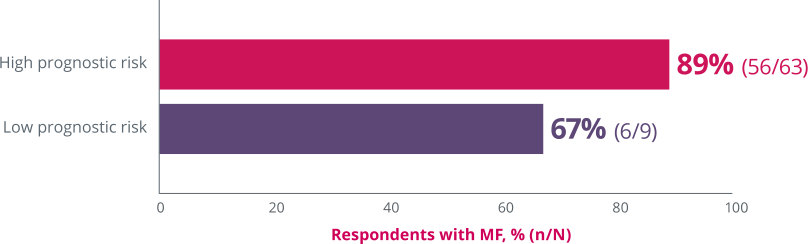
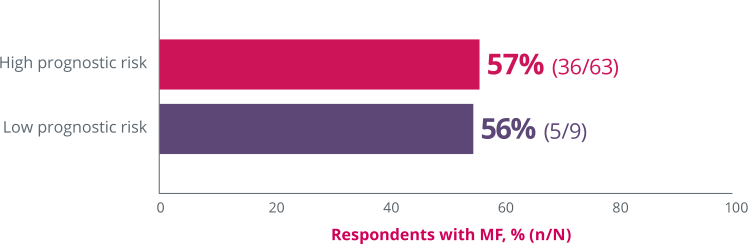
Impact of MF on quality of life, daily activities and ability to work2‡
Reduced quality of life:
Had to cancel planned activities at least once in previous 30 days:
Of employed patients with MF:
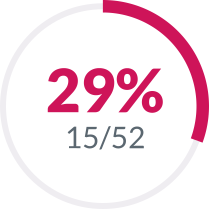
reported ≥1 day sick away from work in previous month
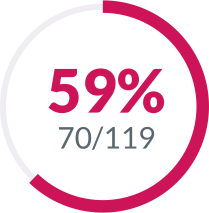
had reduced their
work hours
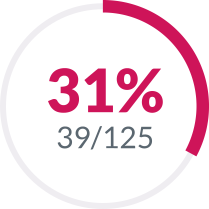
had voluntarily terminated
their job
‡Data from 207 patients with MF in the US MPN Landmark survey.2
Adapted from Mesa R et al, 20162
Recognising and monitoring symptoms
Under-recognised symptoms
Many patients with MF do not recognise non-specific symptoms as being related to their disease. Clinicians may not be aware that patients are not reporting these symptoms, believing there to be no connection to MF.3 Patients may also develop 'coping mechanisms' for long-term symptoms, and not fully appreciate the severity.4
Proportion of patients not attributing symptom experienced to MF:3
- Difficulty sleeping: 49% (53/109)
- Numbness/ tingling in hands/ feet: 43% (36/84)
- Dizziness/ vertigo/ light-headedness: 40% (34/86)
- Pruritus: 33% (31/94)
- Abdominal discomfort: 23% (28/120)
- Night sweats: 23% (26/114)
- Fatigue: 12% (20/168)
Symptoms associated with MF continue after diagnosis and can worsen with time.
Proportion of patients experiencing symptoms
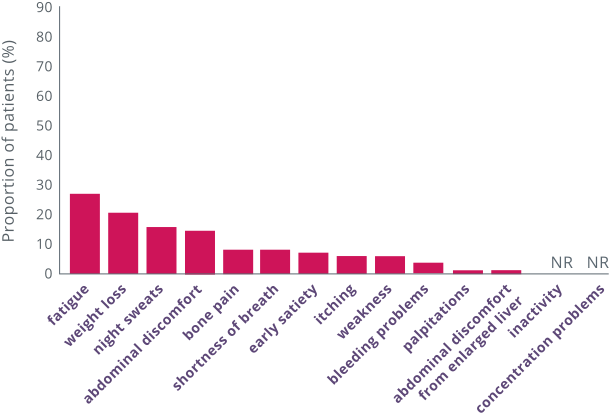
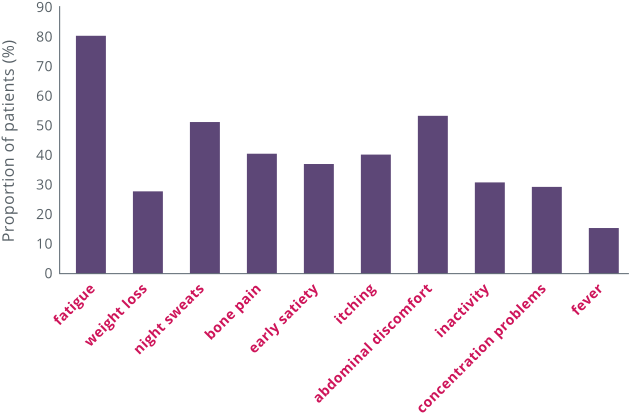
Of 42 consultant haematologists surveyed in the UK about the diagnosis and management of MF:6
- 93% assessed constitutional symptoms
- 52% used symptom assessment tools, most commonly to track treatment response
Of those using a symptom assessment tool:6
- 79% used the MPN10 symptom tracker
MPN10 symptom tracker
MPN10, or myeloproliferative neoplasm symptom assessment form total symptom score (MPN-SAF TSS), asks patients to score the severity, on a scale of 0 to 10, of 10 symptoms:7

Fatigue

Early satiety

Abdominal discomfort

Inactivity

Problems with concentration

Night sweats

Pruritus

Diffuse bone pain

Fever

Unintentional weight loss
The use of symptom assessment questionnaires allows objective and chronological evaluation of symptom burden, and may:4,7
- aid diagnosis
- benefit physician–patient communication
- help to monitor disease progression
- inform timely and appropriate therapeutic decision making
- allow assessment of treatment response and need to alter treatment
Jane has been receiving treatment for her MF and in accordance with her haematologist's wishes and completed the MPN10 form before her first follow-up appointment. Her score had decreased, indicating a reduction in symptom burden since initiating treatment.
Jane's baseline MPN10 Jane's follow-up MPN10Fictional patient; image is of a model.
Adverse events should be reported. Reporting forms and information can be found at
www.mhra.gov.uk/yellowcard.
Adverse events should also be reported to Novartis online through the pharmacovigilance intake (PVI) tool at
www.novartis.com/report
or alternatively email medinfo.uk@novartis.com or call 01276 698370
References
- Harrison C N, Koschmieder S et al. The impact of myeloproliferative neoplasms (MPNs) on patient quality of life and productivity: results from the international MPN Landmark survey. Ann Hematol 2017;96(10):1653-1665
- Mesa R, Miller C B et al. Myeloproliferative neoplasms (MPNs) have a significant impact on patients' overall health and productivity: the MPN Landmark survey. BMC Cancer 2016;16:167
- Mesa R A, Miller C B et al. Differences in treatment goals and perception of symptom burden between patients with myeloproliferative neoplasms (MPNs) and hematologists/oncologists in the United States: findings from the MPN Landmark survey. Cancer 2017;123(3):449-458
- Knight E A, Osunsuyi-Fagbemi S, Neely J. Managing patients with myelofibrosis in the era of Janus kinase inhibitors. J Adv Pract Oncol 2015;6(6):532-550
- Mead A, Somervaille T. A retrospective real-world study of the current treatment pathways for myelofibrosis in the UK (the REALISM UK Study). Presented at the 61st American Society of Hematology Meeting, Orlando, Florida, US, 7-10 December 2019; poster 1671
- Harrison C N, Mead A J et al. A physician survey on the application of the British Society for Haematology guidelines for the diagnosis and management of myelofibrosis in the UK. Br J Haematol 2020;188(6):e105-e109
- Emanuel R M, Dueck A C et al. Myeloproliferative neoplasm (MPN) symptom assessment form total symptom score: prospective international assessment of an abbreviated symptom burden scoring system among patients with MPNs. J Clin Oncol 2012;30(33):4098-4103